
Winter Sunshine in Southern California: An In-Depth Campus Visit to EF Academy Pasadena
In December, Southern California is gently embraced by its Mediterranean climate. With daytime temperatures hovering around 20°C (around 68°F), warm sunshine dispels the chill of winter, creating a uniquely comfortable and energetic atmosphere. After visiting schools across different regions of California, members of the school visit delegation expressed their fondness for Southern California’s weather and the Pasadena community, saying, “We really love it here!”

At 2:30 p.m., as the delegation’s bus slowly entered the campus, the eighth stop of the 2025 GE California FAM Trip officially began. Sunlight reflected softly off the glass façades, and in the warm breeze, our campus visit to EFA School Pasadena officially got underway.

We were warmly welcomed by the school’s core leadership team: Head of School Annie Hall, Director of Admissions Jessica Hazelton, Director of Admissions & Enrollment Bobbie Jo Dobb, and International Admissions Officer Josh Lin, who had arrived early to greet the visiting group.
Following their welcome remarks, everyone introduced themselves to get acquainted. One particularly memorable moment was Head of School Annie Hall’s humorous self-introduction:
“Hello everyone, I’m the interim head of school. People often laugh at my name because there’s a famous movie called *Annie Hall*. Of course, that’s not because I have very cool parents—it’s because I married someone whose last name is Hall.”
Her humor and sincerity drew laughter from the room, setting a relaxed and friendly tone for the exchange.


About EFA School
EFA School is a highly international boarding school dedicated to developing students’ academic readiness and life skills for university and beyond within a diverse, multicultural environment. The school enrolls students from 29 countries, alongside a significant number of domestic U.S. students, creating an open and dynamic campus culture.


Academically, EFA School emphasizes a student-centered approach through project-based learning, closely connecting classroom knowledge with real-world applications. This approach helps students build global perspectives and practical problem-solving skills. The school currently offers AP courses and advanced research-level classes, while actively pursuing authorization as an IB World School to further enhance academic depth and international recognition.
To support student success, the school has a dedicated Learning Support Director, offers EAL (English as an Additional Language) courses, and provides structured teacher office hours and multiple study hall periods. These resources ensure personalized and continuous academic support for students from diverse educational backgrounds, fostering growth in a safe, healthy, and inclusive environment.
Speaking of environment, the San Gabriel Mountains are visible throughout the modern campus, and the school team highlighted that the entrance to Angeles National Forest is located nearby. Spanning over 700,000 acres, the forest features canyons, pine forests, waterfalls, alpine meadows, and more, offering opportunities for hiking, camping, rock climbing, and stargazing. As one of the most accessible natural retreats in the Los Angeles metropolitan area, it provides EFA School Pasadena students with convenient access to outdoor education and experiential learning. Resources such as the 28-mile Gabrielino National Recreation Trail and Mount Wilson Observatory further support STEM learning in environmental science and astronomy, as well as outdoor leadership development.
Campus Tour
After the warm welcome and introductions, we began the campus tour in small groups, led by school administrators, exploring both academic and residential spaces.


Our first stop was the Health Center, where delegation members engaged in an in-depth discussion with Nikki, the school’s mental health counselor. She introduced the structure and operations of the boarding school health center, which includes two nurses, Health Center Coordinator Amir, mental health counselor Nikki, and Java, a beloved therapy dog.

Together, the health team supports students’ physical, emotional, and mental well-being. Nurses assess physical conditions and manage medications; the coordinator liaises with external medical providers and maintains close communication with families; and Nikki, together with Java, provides emotional support and a safe space for students to talk. The health center’s core mission is to ensure students feel cared for, secure, and supported throughout their boarding experience.
We then visited various academic and activity facilities, including student residences, the dining hall, Blackwell Hall (Math & Physics), Robinson Center (Athletics), Strong Hall (Humanities), and Douglas House, gaining a comprehensive view of the school’s learning environment.
▼ Strong Hall – Humanities Building

▼ Classrooms


The second stop of the GE visit was Cedar House, the girls’ dormitory, where Dorm Head Amy introduced the school’s residential philosophy and daily life in detail.
▼ Cedar House – Girls’ Dormitory


Each dormitory is supported by dedicated dorm parents who serve as “second parents” during students’ time away from home. They oversee daily life, maintain regular communication with students, organize dorm activities, provide emotional and academic guidance, mediate conflicts, and help maintain strong connections between school and families.

The school highly values the role of dorm parents, fostering a collaborative environment where students feel comfortable being themselves. Students gradually develop independence through daily responsibilities such as cleaning shared kitchens, preparing simple meals, and doing laundry and ironing.
Communication between students and staff typically takes place via Google Chat or Gmail. The school provides shuttle services to shopping centers, Pasadena downtown, beaches, and bowling alleys. When students request group outings, dorm parents assist with permission forms and transportation coordination—an especially common and natural process in the boys’ dorms.
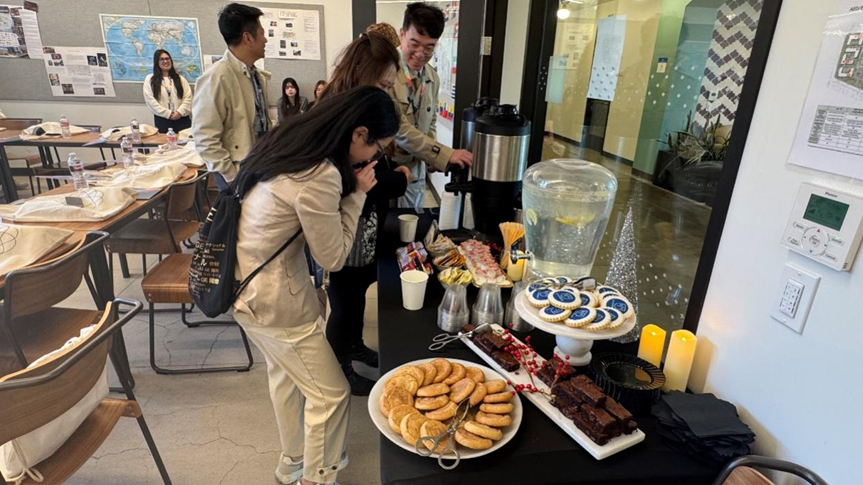
Recently, dormitories hosted cookie decorating and gingerbread house activities, adding warmth to the holiday season.


Students study in bright, quiet study rooms, enhancing focus and efficiency. Dorm rooms are primarily triple occupancy (with four beds), with options to upgrade to double or single rooms. Shared kitchens provide additional convenience and independence.


During the first year, roommates are assigned based on interests and personalities. Differences in habits are natural, so dorm parents closely monitor interactions and guide communication when needed. In subsequent years, students may request roommates, with encouragement to live with peers from different cultural backgrounds to support language development—while also recognizing the comfort of connecting with peers from the same country when needed.


After visiting the girls’ dorm, we toured the dining hall, filled with natural light and mountain views.
▼ Cena Dining Hall


The school emphasizes freshly prepared meals rather than pre-packaged food, with even salad dressings made in-house. Lunch that day featured chicken parmesan sandwiches, and every Monday the dining hall offers a hot chocolate bar with marshmallows and cherries.


Continuing through campus, we visited the science building, where students engage in advanced studies such as organic chemistry research, anatomy, and bioinformatics. Teachers showed cultures being observed in lab equipment and shared plans to introduce marine biology courses following IB authorization.
▼ Blackwell Hall – Math & Physics


Passing the recreational pool and a temporary campus set up to assist a local elementary school affected by January wildfires, the group arrived at the athletic center. Coaches introduced the school’s sports programs, including an undefeated boys’ soccer team, boys’ and girls’ volleyball, cross-country, track and field, girls’ beach volleyball, boys’ golf, and co-ed tennis. The coach proudly highlighted a top-performing tennis player from China.
▼ Recreational Pool

▼ Robinson Center – Athletics

Faculty & Student Sharing
Following the campus tour, the school hosted a comprehensive presentation featuring faculty and students, including Head of School Annie Hall, Director of College Counseling Kyle Kurfirst, and Academic Director Dr. Kaela Clapp. Each guest also received a thoughtful welcome gift.
EFA School Pasadena enrolls students from 35 countries and regions, with approximately 65% international students and 35% domestic students, creating a naturally integrated multicultural environment.
Head of School Mrs. Annie Hall has nearly 20 years of experience in education and shared the school’s philosophy and instructional practices. EFA School is committed to developing students’ comprehensive skills for university success and life beyond, with a strong emphasis on project-based learning, real-world application, and global perspectives.

The school’s IB Program Coordinator also greeted the group, sharing that he has been working within the IB framework since 2013.

Academic Director Dr. Kaela Clapp maintains regular communication with families via email and Zoom to ensure parents stay informed about students’ academic progress. Project-Based Learning (PBL) is a core academic approach at EFA School, and she illustrated this philosophy with concrete examples. In a Grade 9 Global History course, for instance, students go beyond textbook theories of archaeology by designing and conducting their own campus-based archaeological projects—whether on the volleyball field lawn or in other areas of campus. Teachers provide guidance throughout, but students are responsible for hands-on execution.
Dr. Clapp also shared an example from a Conceptual Physics class involving an “egg drop” experiment, encouraging students to consider how to protect others’ safety during experimental design. Through immersive, hands-on learning experiences, students not only acquire knowledge but also develop the ability to conduct field research and apply learning in diverse real-world contexts.

Photos showed Mandarin language students visiting a local Chinese garden and participating in rich cultural immersion, as well as students in American Studies engaging in humanities field research on the Spanish mission system. These examples gave the visiting group a deeper understanding of how project-based learning is structured and how knowledge is applied in authentic contexts. The school encourages students to step beyond campus, explore the real world, and experience learning as something tangible, experiential, and meaningful.
Academic Director Dr. Clapp also introduced the school’s academic support system, including EAL language support courses. The Learning Support Director, Laura, comes from a strong educational background and specializes in educational therapy, providing targeted guidance for students who need additional support in the classroom. Some students also participate in language lab courses for ongoing, individualized assistance.
To further support English proficiency and academic growth, teachers integrate office hours flexibly throughout the school day, often having lunch with students. This approach eliminates the need for early arrivals or late stays after school while increasing meaningful teacher-student interaction. Mondays are designated for small-group study halls and advisory sessions, where students review academic progress and plan for the week ahead. Additional study hall time is offered after school on Tuesdays and Thursdays. These structures are particularly important for boarding students—any student needing extra academic support can access cross-disciplinary teachers through multiple channels, ensuring students from all backgrounds receive adequate assistance.
Director of College & Academic Counseling Kyle Kurfirst shared his academic and professional background: a bachelor’s degree from the University of Chicago, former Assistant Director of Admissions at the University of Chicago, an MBA from Chicago Booth School of Business, and previous experience as an Operations Manager in Amazon’s Pathways Program. Since joining EFA School in 2023, Kyle has led a comprehensive college counseling program alongside three additional counselors, collectively supporting students’ academic and university planning.

College counseling formally begins in Grade 11. For students interested in engineering, counselors proactively provide curated lists of relevant summer programs, helping students explore and pursue their passions while building strong connections with university-level resources. The school also hosts college fairs, welcoming representatives from over 100 universities to campus for face-to-face conversations with students.


The school also places strong emphasis on guiding students to use artificial intelligence in thoughtful, responsible ways.
During the student life presentation, faculty explained holiday schedules and dining arrangements. Major school breaks include summer vacation, Christmas break (approximately 2.5 weeks), and spring break (approximately 3 weeks). Given that many students live far from campus, breaks are relatively generous. The campus remains open during Thanksgiving, and most students choose to stay.
Faculty members also shared their personal reflections on working at the school: “I love this job. I truly enjoy what I do, and I love working with students.”
During the student activities and clubs segment, student representatives Jordan, Leo, Rihanna, Vivian, and Lucia, along with Activities Director Caitlin, took turns sharing their experiences. The session concluded with a group photo and short student interviews.

Student Life Highlights
Jordan (Grade 11) : Enjoys basketball, running, and reading.
Leo (Grade 11) : A university-level soccer team member who highlighted a course called Innovation Impact, where students design projects that create real impact on the school or local community. He is currently preparing a proposal for a school eco-fair.
Rihanna (Grade 12) : Passionate about dance and leads the development of the school’s dance club.
Vivian (International Student, Vietnam) and Lucia (Grade 12, Spain) : Vivian expressed high satisfaction with the school, while Lucia shared her athletic journey—playing volleyball last season and now joining the basketball team, with weekly trips to the University of Southern California, highlighting the school’s advantageous location.
Students described their daily schedules: formal classes run from 9:00 a.m. to 3:30 p.m., including lunch. After-school time is dedicated to clubs and athletics. Club activities are especially active on Mondays and Wednesdays, while study halls are offered after school on Tuesdays and Thursdays. Athletic practices and competitions typically take place for about two hours after school on weekdays. On Wednesdays, classes begin later, around 10:00 a.m.
Some more introverted students shared that they successfully navigated the adjustment period through roommate interactions, participation in sports and weekend activities, and support from teachers. Many agreed that sports are one of the best ways to make friends. Students also expressed strong appreciation for campus dining, with burritos and mushroom soup among the favorites.
Activities & Clubs
As Activities Director, Caitlin oversees after-school clubs, off-campus excursions, on-campus events, and cultural celebrations. All activities are open to all students and are continually adjusted based on student interests. The activities team excels at organizing diverse experiences, including trips around Los Angeles, beach outings, and museum visits—offered free of charge to students—ensuring everyone has opportunities to participate. The school’s student-centered approach helps students find a strong sense of belonging within the community.
The school also hosts large-scale celebrations such as Lunar New Year fairs showcasing campus diversity, as well as school dances. However, the most impactful stories often come directly from students: over 85% of clubs (approximately 20 in total) are founded and led by students, providing valuable opportunities to develop time management, leadership, and organizational skills.
Examples include:
A Student Leadership Scholarship Association supporting those in need
A girls’ academic mentoring initiative supporting Afghan girls with limited access to education, pairing students for weekly English and math tutoring
A Biology Scholars Club inspired by future medical professionals, organizing field trips and inviting healthcare experts to speak
Through these stories, the visiting group deeply felt how the school empowers students to express themselves, pursue their interests, and receive strong institutional support—resulting in a remarkable sense of belonging among the students we interviewed.

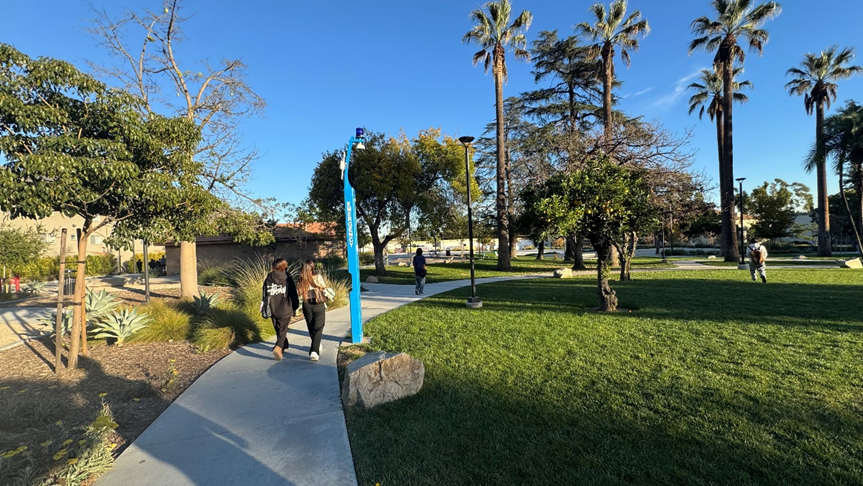


After the presentation, we visited the theater to watch student stage productions rehearsed after school. Lighting, sound, costumes, props, and stage construction were all the result of collaborative teamwork. Two engaging performances moved the audience, leaving everyone impressed and proud of the students’ creativity and dedication, and eagerly anticipating their spring productions.


Exiting the theater, we observed student-athletes in training, once again experiencing the vibrant energy of campus life.

In the early evening, at the gracious invitation of Head of School Mrs. Annie Hall, the visiting group gathered at a local Pasadena restaurant for dinner, bringing this rich, detail-filled campus visit to a warm and memorable conclusion.


Comments