
FAM trip - Midland School: A Boarding Education Immersed in Nature and Independence
During the GE FAM Trip 2025 California school visit, we traveled from the coastline into the mountains. Our fifth stop was Midland School, located in the Santa Barbara mountain region of Southern California. Nestled deep within Los Padres National Forest, far from the noise of the city, Midland is truly a boarding school “hidden in nature.” It was in this quiet and pure environment that we began our in-depth visit to Midland School.
At 8:30 a.m., we arrived at Midland School’s Main House—a classic red wooden building that serves as the school’s Welcome Center. The air was fresh, surrounded by dense forest, with sunlight filtering through the trees and falling onto the paths. The campus felt as though it was tucked away in an untouched woodland. The faculty warmly welcomed us with coffee, tea, and light breakfast snacks. Inside the Main House, we introduced ourselves, got to know one another, and learned about the campus layout and the school’s overall profile.

The interior of the Main House felt warm and inviting. Its wooden structure and fireplace gave a strong sense of being at home. Staff members introduced the school’s history—this year marks Midland School’s 93rd anniversary. Despite its long history, the school maintains a small, comfortable scale and blends seamlessly into its natural surroundings. We then split into groups and began the campus tour led by student volunteers.
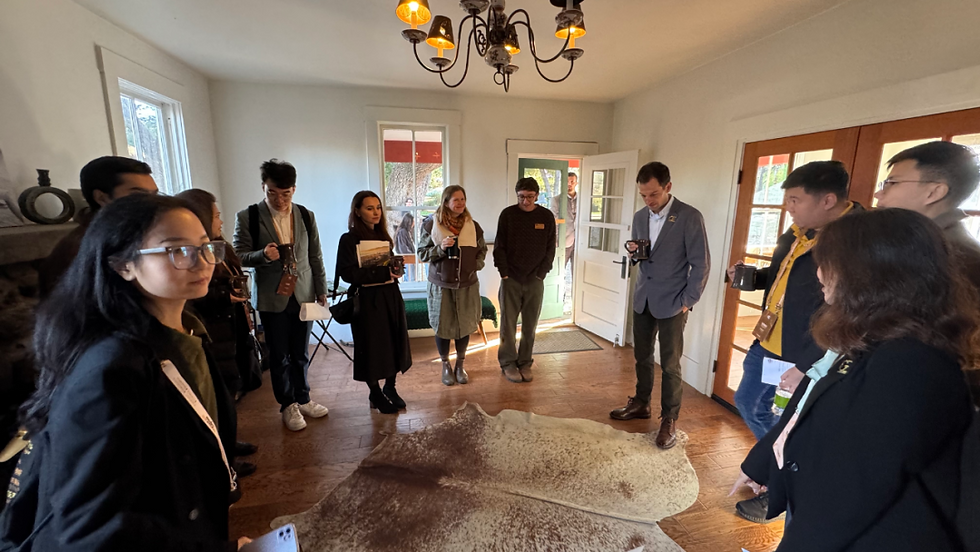

Student-led tours were one of the most memorable parts of this visit. Following the students along forest paths, we visited the chapel, art classrooms, woodshop, dormitories, library, gym, dining hall, stables, and farm. At each stop, students explained how the facilities are used and shared insights into their daily learning and life on campus.
Campus Facilities
1. Chapel
The chapel hosts gatherings twice a week (Mondays and Thursdays, with formal dress required on Thursdays), providing students with a space to share life stories and reflections. During the visit, we noticed the names of past students displayed on the walls, highlighting the school’s strong sense of continuity and history. Students shared personal experiences, joined by teachers and older students, creating a warm and open atmosphere.

The school currently enrolls about 70 students in grades 9–12, including around 10 international students. The campus feels like a close-knit family, with teachers caring for students much like parents. Midland has a history of approximately 93 years. The school does not offer ESL courses. Students are allowed to bring dogs into dorms, classrooms, and other spaces. Hands-on work is a core part of daily life—every student has responsibilities such as farming, cleaning, or ringing the bell.
2. Art Classroom
The art program is highly diverse. Starting in grade 9, students take foundational art courses that include ceramics, advanced ceramics, circus arts, woodworking, and both two-dimensional and three-dimensional art. Students may choose advanced courses based on their interests. During our visit, students were deeply engaged in their ceramics projects, some sculpting detailed clay works.


3. Woodshop
In the woodshop, students were building surfboards by hand. Every Wednesday, they also head to a nearby beach for surfing. The woodshop develops hands-on skills while helping students understand the relationship between materials, design, and practice. We observed students carefully measuring, cutting, and assembling at their workbenches, with classroom learning closely integrated with real-world application.


4. Girls’ & Boys’ Dorms
The dormitories are scattered throughout the forest, each building being single-story and very compact. The girls’ dorm area includes 12 buildings, each with two rooms. Typically, two students share a room, while some upper-grade students have single rooms. Dorms are arranged so students of the same grade live close to one another, encouraging social interaction and community bonding. There is no central heating; warmth comes from wood-burning stoves. Students gather firewood and light fires themselves, a lifestyle that strongly fosters independence.


Students are allowed to use computers freely in the dorms but are not permitted to use mobile phones. This “phone-free environment” encourages face-to-face interaction, active social engagement, and deeper enjoyment of the natural surroundings.


5. Gym and Outdoor Activity Areas
The school requires every student to participate in at least one competitive sport each year, such as basketball, volleyball, soccer, or cross-country. Non-competitive options are also available, including farm work, horseback riding, yoga, hiking, and surfing. Students even take part in building and maintaining the campus mountain bike trails. Sports and outdoor activities not only strengthen physical fitness but also develop teamwork and independent problem-solving skills.


6. Farm and Stables
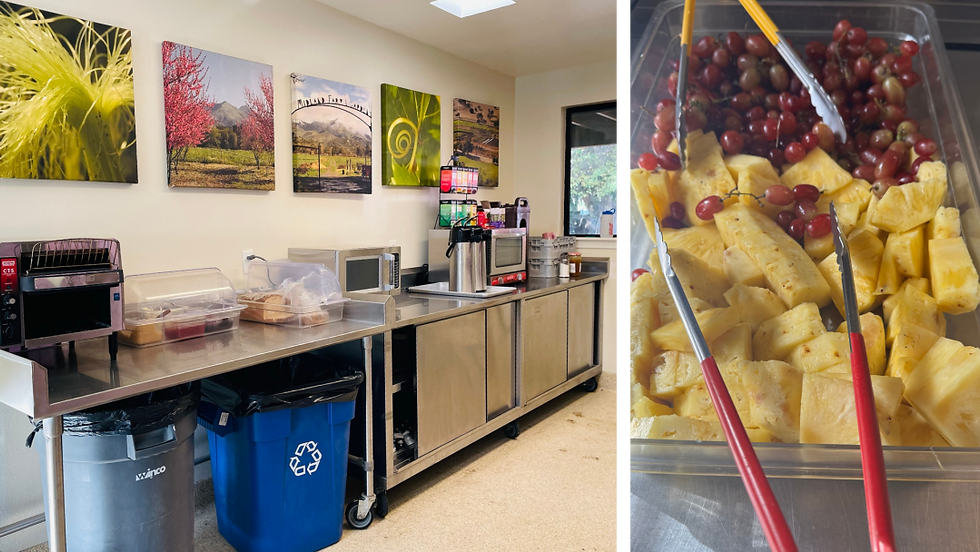
The campus farm covers more than ten acres and is jointly managed by two full-time farm staff and students. Students plant, water, fertilize, and harvest crops according to the season, and also help care for animals such as horses and other livestock. Through farm work, students learn about food sources, natural cycles, and the value of labor. Most of the dining hall’s ingredients come directly from the farm, with students involved in growing, harvesting, and cooking. Feedback on the food is consistently excellent.

While visiting the farm, we spoke with a member of the admissions team and learned more about the high level of student autonomy in farm courses. Students research seasonal conditions, plan what and how much to plant, and take part in every step of cultivation and maintenance—truly experiencing the full process “from land to table.”


Class Exploration
Next, guided by current students, we entered classrooms to observe two ongoing courses up close, gaining an immersive classroom experience.
1. History Class
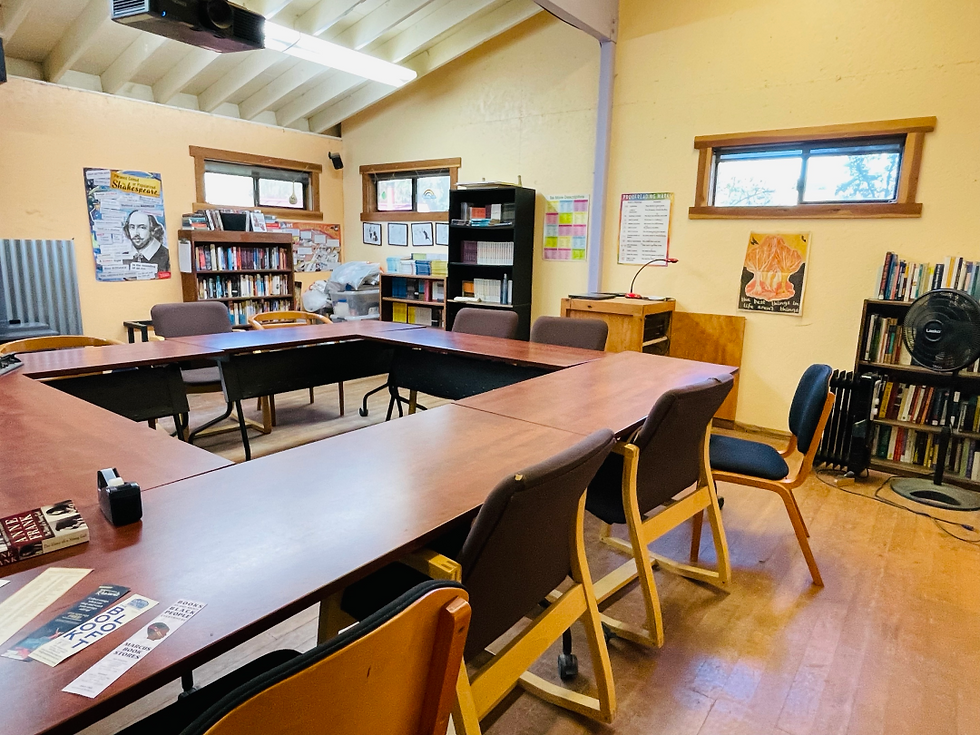
The history class focused on Western philosophy, covering Socrates, Plato, and Aristotle. The teacher combined lectures with discussion, encouraging students to express their understanding and personal reflections. The classroom atmosphere was open and engaging, with active participation and individualized guidance based on each student’s level of comprehension.


2. Math Class
The math class used game-based learning to teach probability. Through hands-on activities and discussion, students developed a deeper understanding of concepts. Small class sizes (approximately 5–10 students) ensured that every student received close attention.
Classroom observation clearly reflected Midland School’s educational philosophy: integrating theory with practice, connecting classroom learning with daily life, and valuing both academic knowledge and hands-on skills.


Student Gathering
We attended a student gathering, a daily routine held twice a day (before lunch and before dinner). All students come together as teachers and students share announcements, reflections, or words of recognition. Though brief, these gatherings foster strong cohesion, with students showing close relationships, mutual support, and respect.


Lunch was held in the dining hall, where most of the food came from the campus farm. Students could see vegetables and fruits they had helped grow themselves. They spoke highly of the meals and enjoyed the unique experience of “growing, harvesting, and enjoying their own food.” We also had open conversations with students and faculty, learning more about their academic life, daily routines, and personal growth at Midland.




Midland School sits on approximately 3,000 acres of land, with about 40 acres actively used. The surrounding area consists of untouched mountains and forests. The school emphasizes independence, responsibility, and hands-on skills. Nearly all life skills are learned through direct experience—lighting fires for warmth, building structures, farming, and caring for animals.
The school is small, with around 70 students and 25–30 faculty members, creating a strong sense of community. Students know one another well, and relationships between teachers and students are close. Despite its long history of 93 years, the atmosphere is warm, inclusive, and free. Students develop not only strong academic abilities, but also leadership, social skills, and practical life skills.


Visiting Midland School feels like returning to nature and embracing independence. Surrounded by forests, with cozy dorms and a lifestyle full of hands-on practice—building tables, chopping wood for heat, farming, and riding horses—students learn things every day that cannot be taught in a traditional classroom.
Learning here goes far beyond textbooks. Classroom knowledge is immediately applied outdoors, making learning deeper and more engaging. Small class sizes foster close teacher-student relationships, ensuring that every individual is seen and supported, and strengthening the sense of community.

At Midland, students balance academics, outdoor life, sports, arts, and farm work. They learn independence, practical skills, and self-discipline, while also gaining teamwork and lasting friendships.
This school is truly special—not just academically, but as a way of life. Being here, you grow to love nature, cherish community, and appreciate your own growth each day.


Comments