
FAM Trip – Flintridge Sacred Heart Academy, CA: A U.S. High School Focused on Girls’ Confidence and Growth
Located in the northern part of Los Angeles, California, in the quiet and elegant La Cañada Flintridge, Flintridge Sacred Heart Academy (FSHA) is a girls’ high school with a century-long tradition while remaining at the forefront of modern education. The school integrates academic rigor, female leadership development, residential care, and a global perspective within a Catholic framework.

This campus visit provided a comprehensive view of FSHA’s educational philosophy and daily life, including introductions from the administrative team, student-led tours, classroom and facility visits, and an in-depth look at residential life.

Welcome & Sharing Session
A Warm and Orderly Welcome
On the day of the visit, Director of Admissions & Enrollment Gloria Díaz Ventura personally welcomed the visiting group. She emphasized the long-standing trust between FSHA and GE and expressed her pleasure in hosting the visit in person.

The campus was filled with festive spirit as FSHA students hosted a Christmas celebration for children from the nearby Santa Teresita elementary school. This exemplifies the school’s Service Learning ethos: students not only acquire knowledge but actively engage with the community and care for others. Gloria briefly outlined the day’s agenda:
Watch a school introduction presentation for prospective families
Take a student-led campus and residential tour
Learn more about academics, arts, and student life
She also introduced key members closely involved with international and boarding programs:
Samantha Herrick | Director of Residential Life (10 years’ experience): Lives on campus, supporting boarders’ daily life and family communication.
Kathy Desmond | Academic Director (nearly 32 years’ experience): Teaches U.S. History and Government and serves as a soccer coach, deeply involved in boarding management.
The team also shared an upcoming program—Women’s Flag Football—a fast-growing sport nationwide and an emerging collegiate and potential Olympic event.

Head of School: Why “Girls’ Education” Remains Important Today
Head of School Marlena Conroy opened with light humor, joking that she felt like “Santa Claus” that day while coordinating the school’s Christmas activities. She shared FSHA’s core mission: a learning community rooted in faith, service, academic excellence, and female leadership.
She highlighted a compelling study: many girls begin losing confidence around grades 3–4, hesitating to raise their hands, take risks, or voice opinions. FSHA strives to reignite confidence and leadership potential during these critical developmental stages.
Therefore, FSHA’s educational goals extend beyond academic excellence to fostering healthy self-awareness: understanding that mistakes are essential for learning, overcoming perfectionism, and addressing imposter syndrome, gradually developing confidence to express ideas, influence others, and take on leadership roles.
Teachers receive professional training on girls’ learning styles, and classrooms are designed to encourage expression, collaboration, and confidence-building.

STEM Strength × NASA: Real-World Impact
The Head of School shared a representative example: FSHA sits directly below the renowned NASA Jet Propulsion Laboratory (JPL). Each year, local students compete for spots in the Space Academy program—over seventy applicants for only forty spots—with FSHA as the only girls’ school selected. This year, six FSHA students were admitted, including returning upperclassmen serving as mentors.
These students participate in five engineering teams, confidently presenting their rockets and projects in male-dominated environments. The Head noted that in co-ed settings, girls often retreat to the background; at FSHA, students are encouraged from early high school to voice opinions, take risks, and assume leadership, ensuring they not only enter but thrive in STEM fields.

Alumni × Parent Perspective: A True “Second Home”
Next, Gabriela (Gabby) Aragon, an FSHA alumna from the Class of 1992 and a parent of a current Grade 11 boarding student, shared her experience. What brought her back as a parent was a line from the school’s mission statement:
“A girl must first know herself in order to joyfully serve others.”
As a mother, she hoped her daughter would feel secure, valued, and grounded in an era of social media anxiety.
The boarding house, originally converted from a hotel, allows short-term parental stays for key moments. Gabby noted that within a month of enrollment, her daughter transitioned from shy and anxious to outgoing and confident, fully engaging with both day and boarding students during a mother-daughter event.
In Gabby’s view, FSHA genuinely provides “A Home away from Home,” with attentive boarding staff, while day students also host international peers during major holidays, fostering a warm, tightly-knit community.
Boarders × Day Students: Deep Integration
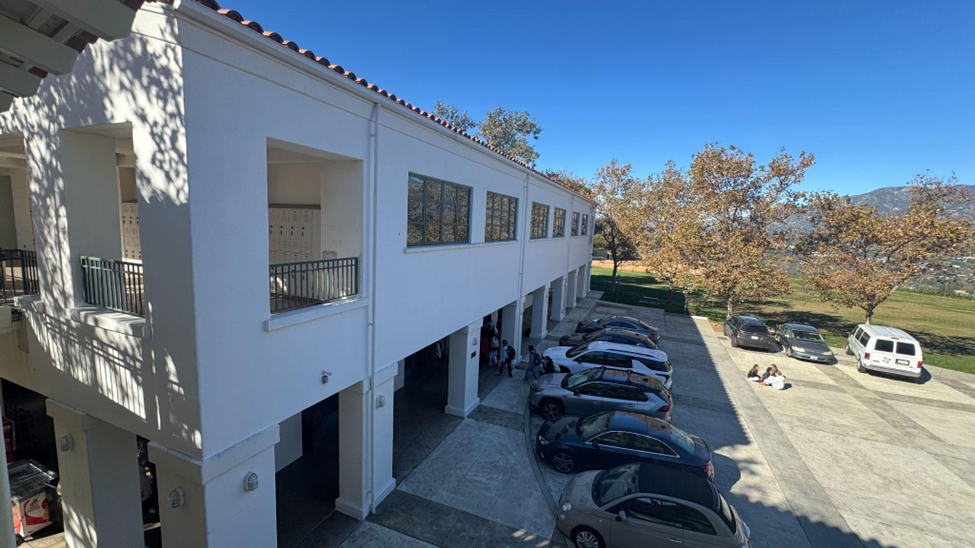
Though boarders comprise only about 10% of the school (around 40 students), FSHA places integration at the core of its system. Day students are invited to monthly boarding dinners, and weekends feature joint activities such as trips to Universal Studios, Disneyland, Halloween events, beach bonfires, and skiing. Day students may also stay overnight in dorms, enabling genuine blending of life and relationships.
Teachers are deeply involved in residential life, often combining classroom teaching with boarding responsibilities. For instance, a science teacher may lead Science Olympiad preparations while supervising dorms and even organizing overnight study sessions before competitions. Boarders may hold ASB student government positions, participating in school governance. Teachers often regard them as “daughters away from home,” balancing care with discipline.

Faith-Based & Inclusive Community
FSHA is a Catholic school, yet student backgrounds are diverse: approximately 50–60% Catholic, with the remainder representing various religions or none. Eight sisters reside on campus, providing “grandmotherly” care and support.
Religious education spans all four years but focuses less on doctrine and more on social issues, ethics, and value-based reflection. Monthly Mass is held with student participation encouraged respectfully and openly, regardless of faith. Even students with no prior exposure to Christianity can integrate seamlessly.

Device & AI Management: Fostering Discipline
The school has clear, gentle electronic device policies. During class, students place phones in Yondr pouches, unlocked after 3:00 p.m.; boarders must submit phones during evening study and communal dinners. Planned overnight internet shutdowns (12:00 a.m.–6:00 a.m.) support healthy routines and sufficient sleep.
While AI is increasingly used in education, FSHA emphasizes academic integrity and original work. Students are not permitted to use AI for translations or assignment completion. Instruction focuses on independent thinking and learning processes, with teachers trained to guide responsible AI use as a tool, not a replacement for thought.

FSHA Campus Visit Highlights
Transportation & Application Process
Student guides explained that FSHA provides bus service for most local cities, easing family commutes. Initially for Grades 9–10, the service now extends to all grades. Special transportation needs are accommodated flexibly; a new bus stop was recently added for a single student, reflecting the school’s personalized care.

For local applicants, FSHA requires the HSBT entrance exam, transcripts, supplementary materials, a math placement test, and a personal statement completed on campus. Compared with the past, this process has been refined to better evaluate academic and holistic potential.

Athletic Facilities & Programs
At the swimming area, student guides shared that FSHA hosts competitive swim and water polo teams. A brother school without a pool also uses FSHA facilities.

Swimming is part of the P.E. curriculum, and all sports programs require tryouts, with JV and Varsity teams, plus Frosh teams for Grades 9–10. The pool building includes full locker facilities.
From Student to Campus Representative: Choice & Growth
During chats, a student guide recalled her own high school selection process: though she had a “dream school,” she did not like it in person. In contrast, stepping onto FSHA’s campus, she immediately felt warmth and friendliness, teacher accessibility, and peer camaraderie, prompting her decision to enroll.
Learning about Round Square international programs on campus also influenced her choice. She now serves as a Round Square student representative.
Round Square is a global educational network spanning 30+ countries and 400+ schools, offering conferences and exchange opportunities during breaks without disrupting academics.
Student Support & Counseling Spaces
In the “Cottages” area, students can access faculty offices, campus ministry, health office, academic advising, psychological counseling, and a wellness space for downtime. FSHA employs a full-time counselor, Ms. Arden, providing regular meetings, especially supporting Grade 9 students’ adjustment and emotional needs.


College Counseling System
FSHA has four college counselors:
Grades 9–10 receive guidance from a general counselor
Grades 11–12 are assigned a dedicated counselor for intensive one-on-one planning
Recent adjustments ensure students have the same counselor from Grade 9 through graduation. Senior meetings may occur weekly; juniors and underclassmen meet monthly.
Arts Center & Curriculum
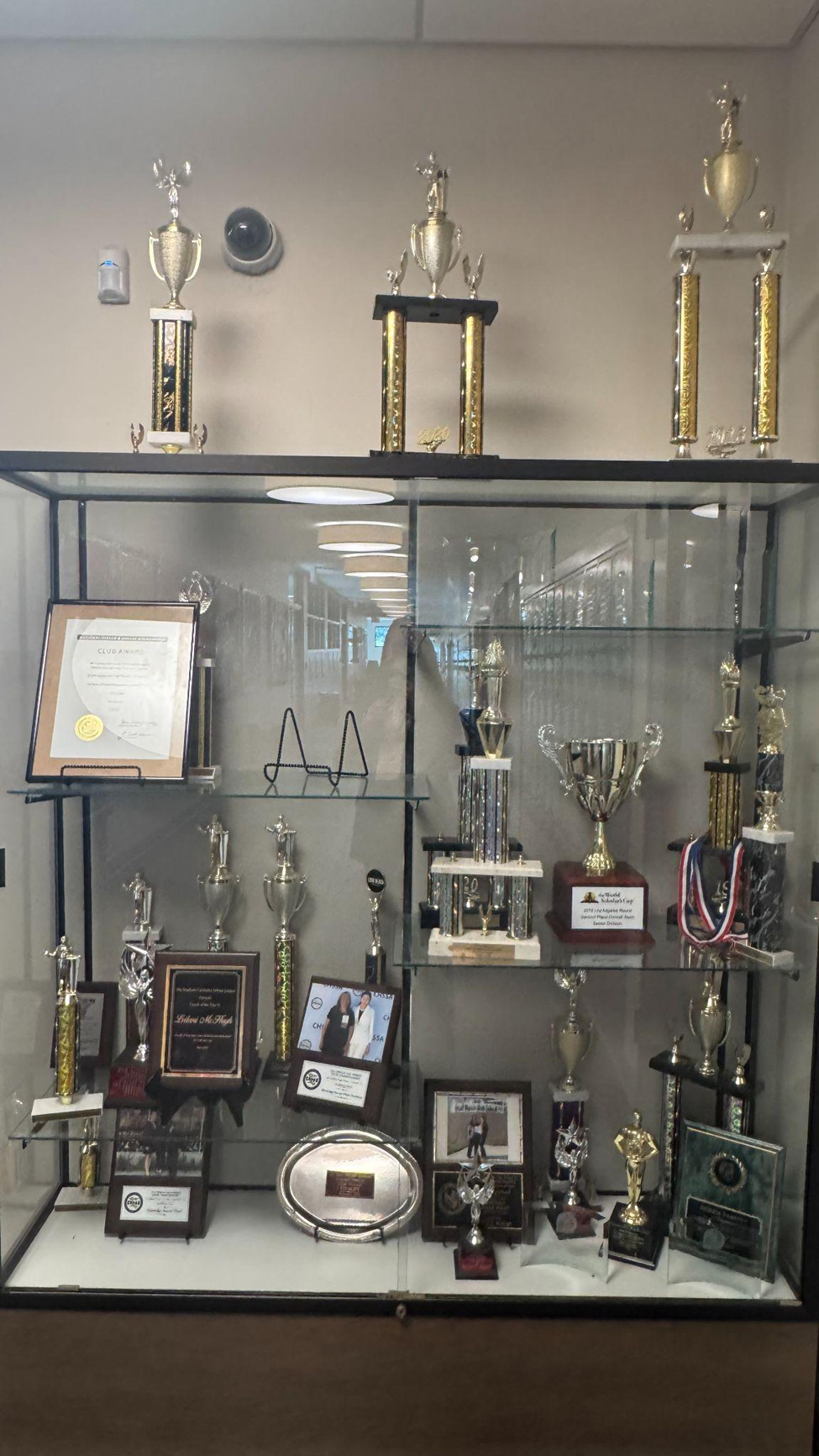
At the Mozilo Family Center for the Arts, classrooms for visual arts, ceramics, dance, and theater are concentrated. Beyond foundational courses, advanced electives are offered.

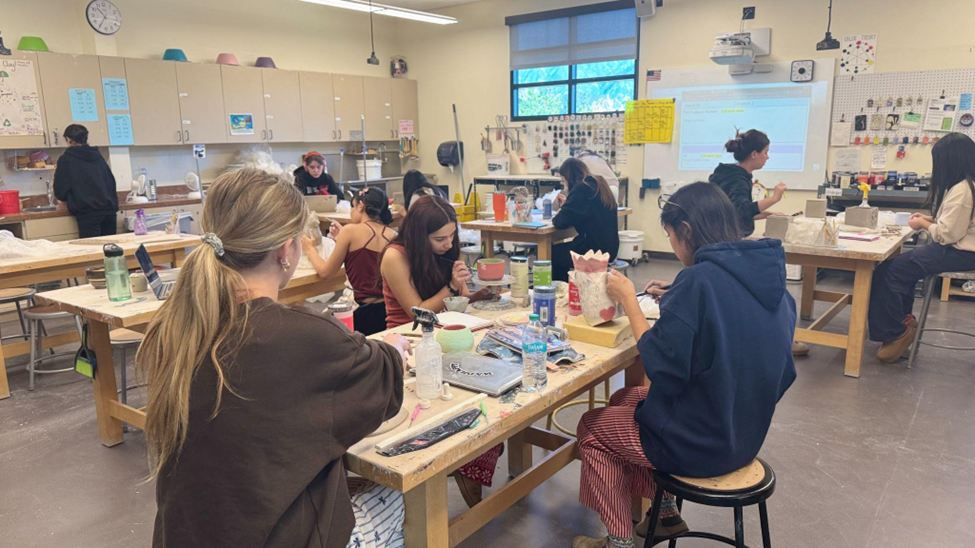
Ceramics Courses
The ceramics curriculum spans Ceramics 1–4, open to all grades. Ceramics 1 is for beginners; 2–4 require prior experience, generally chosen by upperclassmen, though students may take courses consecutively over four years.

Theater & Dance Programs
In the theater hall, student guides showed performances and student artworks. Each semester features major events:
Fall Play
Spring Musical
Winter Concert
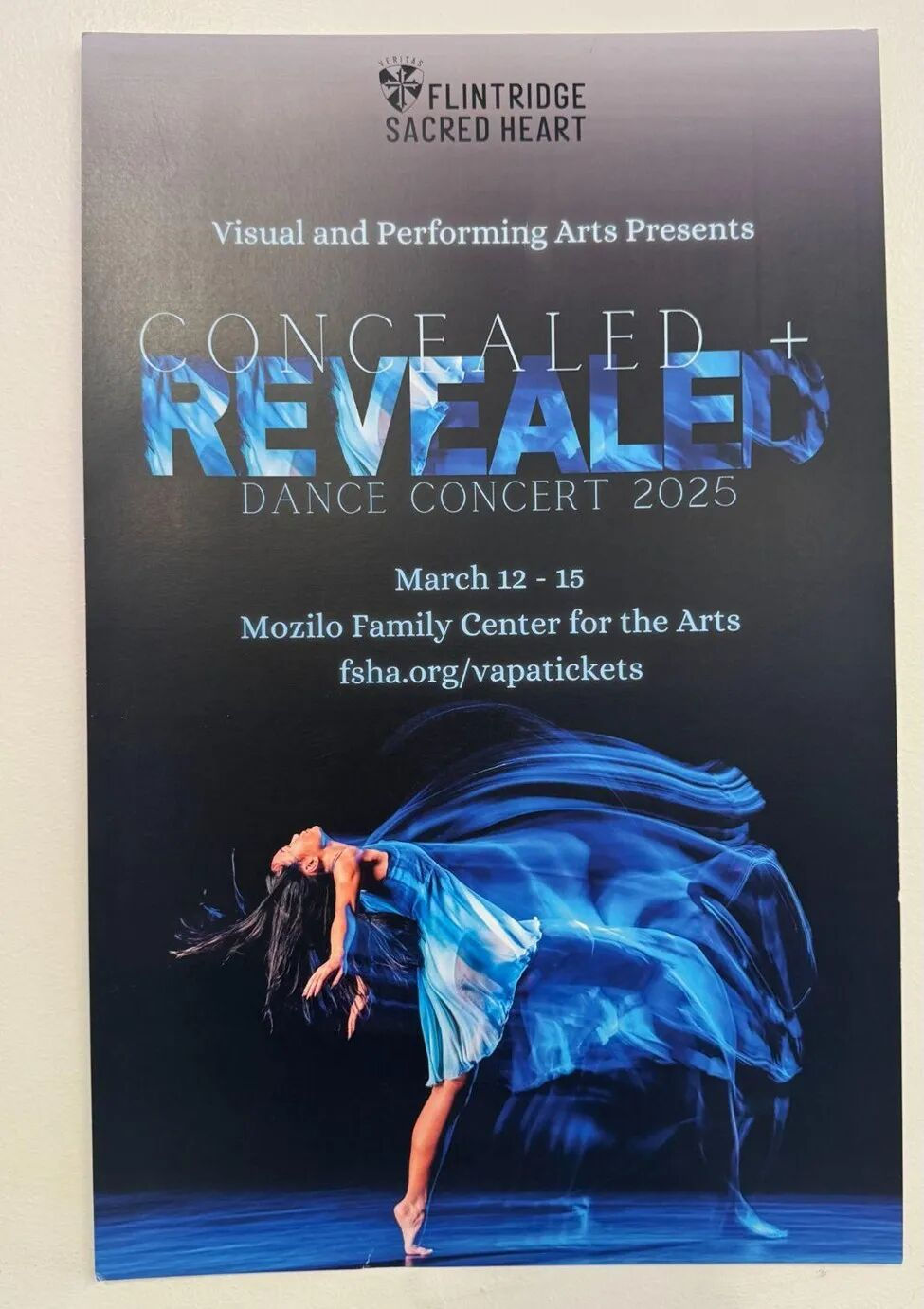
Spring Dance Showcase
All students may participate; dance courses require no prior experience, and theater performances do not mandate course enrollment, encouraging exploration and self-discovery.


Dance courses range Dance 1–5; after-school clubs include UDC (street dance) and VDP (modern dance), mostly student-led, occasionally guided by professional choreographers. New students may audition for advanced levels.

Backstage operations are almost entirely student-run, including lighting, stage management, and costume production. Stagecraft electives teach woodworking and set construction. Dance studios are also used for clubs like yoga. Electives are open annually for exploration across disciplines (e.g., Dance in Grade 9, Ceramics in Grade 10, Coding in Grade 11).


Academic Buildings & Classroom Environment
In the main academic building, most classes—including math, English, world languages, and some sciences—take place. Class sizes are typically 10–16, max 20, allowing individual attention. FSHA serves Grades 9–12 with ~408 students (~100 per grade). Uniforms maintain a neat and orderly environment.


The library is open during lunch and flexible periods and hosts club meetings. Librarians assist research, and free printing is provided. Hallway bulletin boards display club information for easy student engagement.


FSHA offers abundant clubs; any student can start a new one. Examples: Science Olympiad led by a science teacher, Fairchild Service Society under CMLT, with Retreat, Service, and Liturgical/Mass support branches.
Academic Integrity & Campus Culture
A Socratic-style English discussion class was observed. Across the room, an Honor Council board manages academic integrity, including AI use, with educationally oriented consequences (written reflections, redo assignments, or Saturday sessions). The system emphasizes understanding and internalizing integrity, not punishment.

Nearby, Spirit Points boards track inter-grade competitions. Upper-grade lockers are semi-flexible in layout but partially grouped by grade.
Student Leadership & Diverse Communities
Student guides also serve as Ambassadors, leading visits, middle school tours, and representing the school externally. A dance display board showcased previous year’s performance results.


Freshman Hall & Four-Year Research Curriculum
In the Grade 9 corridor, lockers are designated for freshmen. The student guide introduced FSHA’s four-year research curriculum:
Grade 9: Research foundations in P.E., with an “Olympic Games” themed project
Grade 10: Research projects in History, displayed on tri-fold boards
Grade 11 (JRP): Year-long research in Religion, topics highly flexible (e.g., Critical Race Theory)
Grade 12 (SRP): Independent research on personal interests (current student studying Women’s and Gender Studies), culminating in a senior research exhibition
This curriculum teaches students to evaluate sources, conduct in-depth research, and prepare for university-level study.
Language Courses & Classroom Examples
In a Spanish class, students reviewed vocabulary using an interactive game called Lookit. FSHA offers Spanish and French courses; most students start at Level 1 but may test into higher levels.

Coding, Robotics & Science Spaces
The visit continued to coding and robotics classrooms equipped with 3D printers and devices. Science classrooms have a lecture area at the front, labs at the back.


In AP Biology, students studied cellular respiration through exercise experiments; in Physics, they built circuits, created buoyant boats from cardboard, and conducted inquiry-based experiments. Teachers have high autonomy to design challenging, hands-on lessons.

The Chemistry classroom layout is similar. Downstairs, the softball field and locker areas are flexible but partly graded by year. Outdoor spaces connect to the gym, supporting diverse athletic activities.

Campus Facilities & Visit Conclusion
Vending machines provide drinks and snacks; girls’ locker rooms support P.E. and sports. The gym serves as a dining, athletic, and assembly space.


At the end, a student shared her journey: from a New Jersey public school to a co-ed Catholic middle school in California, and now FSHA. She noted increased relaxation, confidence, focus, minimal social pressure, and greater willingness to participate in class discussions, feeling fully supported in self-expression.

Boarding Life & Campus Culture
Entering FSHA’s residential area reveals a complete support system designed around learning, living, and growth.
Curricular Background & Campus Spirit: Tradition Meets Modernity
FSHA courses emphasize academics, values, and worldview development. Hallways display historical photos, including a rare “snow on campus” scene cherished by students.
Outdoor courtyards host ceremonial events; the night before graduation, student council members gather in academic regalia, switching to white dresses and red roses for the formal ceremony.

Residential Tour & Overall Atmosphere
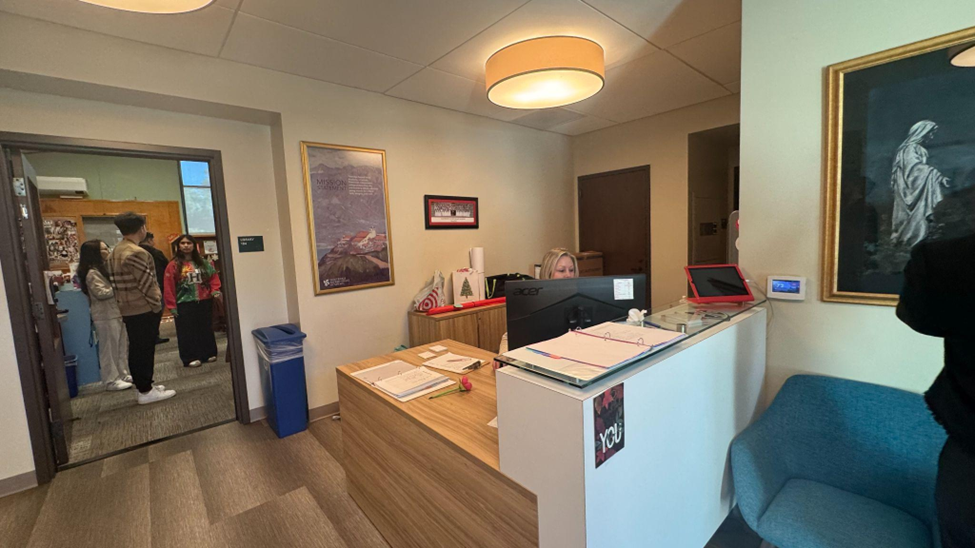
The group met Director of Communications Sandra, who shared campus photos. The boarding building entrance leads to a spacious common area for puzzles, crafts, dorm meetings, or TV. Breakfast and dinner are served in the dining hall, with optional weekend cooking. Weekly supervised shopping trips accommodate diverse cultural diets.


Students may also order delivery, often bubble tea drinks. Delivery adjusts for hillside dorm locations.
High-Quality Boarding Facilities in Former Hotel
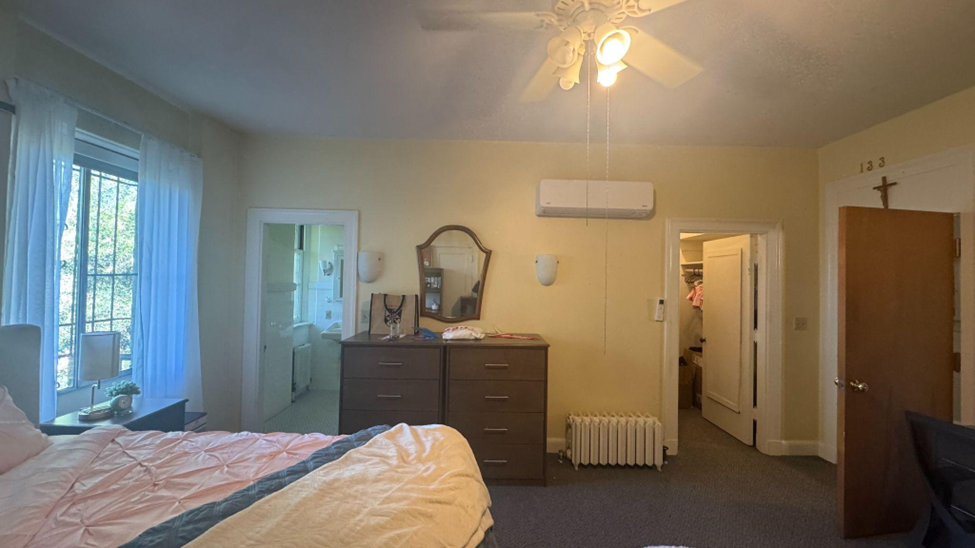
Dorm rooms feature private bathrooms, walk-in closets, ceiling fans, under-bed storage, air conditioning, and radiant heating. Rooms are mostly doubles, with some triples and limited singles available at extra cost. Ninth graders often occupy triples, upperclassmen doubles.

Basic furniture and bedding are provided; students personalize rooms with photos or decorations. No TVs in rooms, but large communal TV areas exist for events like the Super Bowl or Oscars.


Thoughtful Roommate Matching & Support
Incoming students complete detailed roommate questionnaires covering routines and preferences; returning students update annually. Matches consider mutual preference and compatibility.
Dorms have four washers and dryers (free), a gym, access to the main campus gym, and filtered drinking water on each floor.
Strict Yet Gentle Dorm Policies
Staff conduct weekly deep cleaning; students manage personal items. Room checks occur Mon–Thu evenings, with Sunday night full inspections to prepare for the week. Pathways from bed to door are maintained for emergency safety.
Vibrant Weekend & Campus Activities
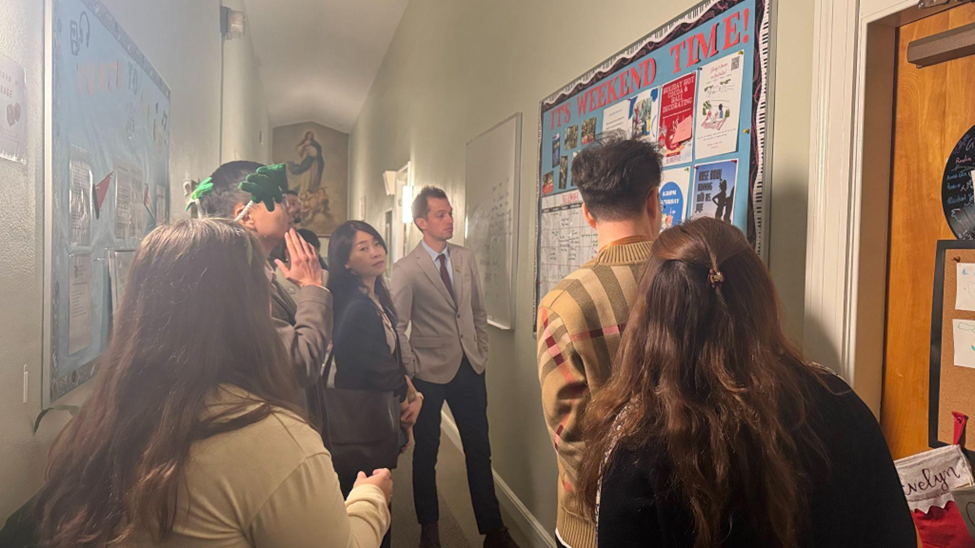
Dorm boards update weekend events: Secret Santa, hotpot nights, movie nights (e.g., Zootopia 2), final exam support, fitness/outdoor trips to Rose Bowl, and campus Christmas concerts. Past events included LA Sparks women’s basketball, Angel City FC, and Broadway shows like Les Misérables and Hamilton, as well as Nerf wars, laser tag, and crafts.
Diverse International Boarding Community
Current boarders hail from Spain, Belgium, China, Vietnam, Malaysia, Uganda, Mexico, and the U.S., with many students having multicultural backgrounds. Despite a higher proportion of Chinese students, the dorm community is internationally diverse, fostering cultural exchange and inclusion.
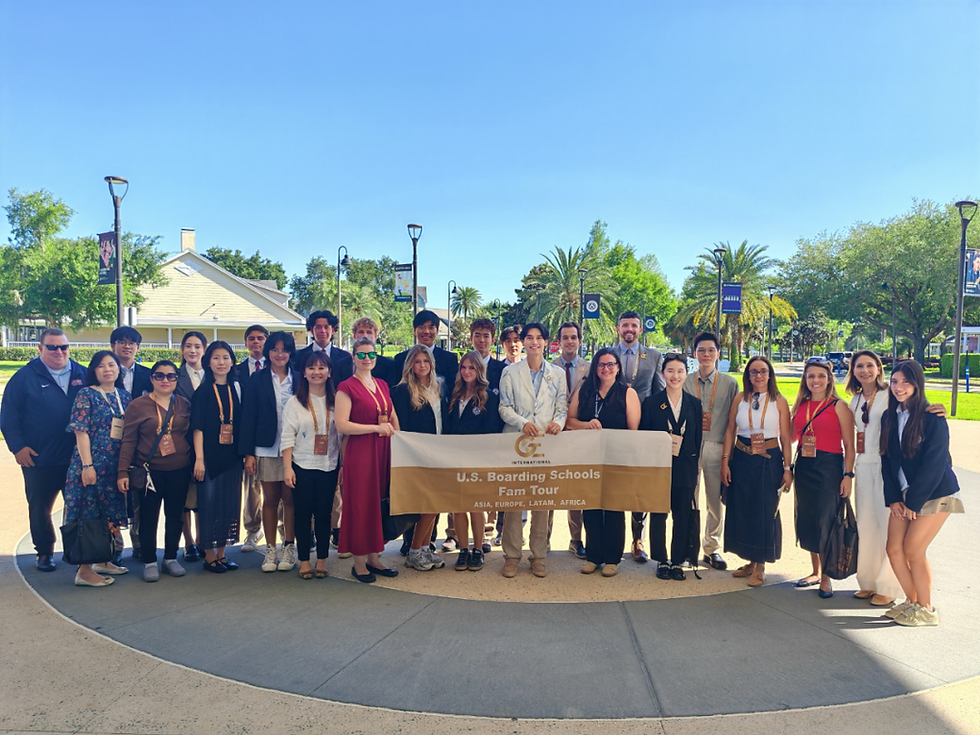
Lunch & Group Photo
The visit concluded with lunch, offering a varied, balanced menu to meet diverse student tastes.


Comments