
A Bright Start to the GE California FAM Trip: Visiting San Domenico School
- tony65993
- Dec 10, 2025
- 12 min read
Today early in the morning, the GE school visit group arrived at San Domenico School under the bright California sunshine by charter bus. Everyone was full of energy and excitement as we prepared to begin the first school visit of the GE California FAM Trip. Now, follow the GE team on a virtual visit and explore this beautiful campus together!

Founded in 1850, San Domenico School has a long and distinguished history of 175 years. It is a historic boarding school offering a rigorous and inclusive K–12 curriculum, enrolling international boarding students in grades 9–12, with international students making up 38% of the student body.

As soon as we entered the campus, we were immediately impressed by its stunning 515-acre grounds. Located in the picturesque Marin County of the San Francisco Bay Area, the campus is just a 30-minute drive from San Francisco, allowing students to enjoy convenient access to city resources and opportunities.

The Director of International Student Admissions, Colleen, was already waiting at the school entrance to warmly welcome us. Our visit began at the Arts Building, where the school thoughtfully prepared coffee and refreshments. The school also specially prepared gifts for us, and Head of School Paul Sanders personally greeted us with great enthusiasm.


The Head of School shared his reflections on San Domenico School:
“When I first drove onto campus, I was struck by its beauty. We get to work and learn in one of the most beautiful campus settings I have ever seen. But even more impressive are the people here. We are proud of our dedicated faculty, who go above and beyond to ensure student success.
Our international students have an incredible four-year experience here. Some serve as student body presidents, others are outstanding athletes. Just a few days ago, one of our international students scored 26 points in a basketball game, including six three-pointers. Our international students shine in so many different areas.
Internationalism is one of the defining features of our school, and many local families are drawn to us for this very reason. I hope you can feel the positive momentum we have on campus right now.
As you drove onto campus, you may have noticed a large dirt area. We have just begun construction on a brand-new turf athletic field, scheduled for completion in the spring. Our soccer, baseball, and softball teams will train and compete there, with the field expected to be in use by April.
Just one week ago, the school released our new strategic plan. I think you will see a school that is deeply proud of its history. This week, we are celebrating our 175th anniversary, and our Founder’s Day is on Saturday, October 6. We take great pride in this history—it gives us strength.”
The Head of School also introduced several key programs and outlined the schedule for our visit:
Visit agenda: Our group will tour the school’s athletic facilities and conclude at Mercedes, the headquarters of the boarding program. At that time, the Director of Residential Life, the Upper School Director, the Academic Director, Melissa Murphy, and three students (including Steven Song, who scored 26 points in the recent basketball game) will join us.
Morata Blō (Tennis Program): The Head of School shared that San Domenico School has recently established a partnership with Morata Blō Tennis Group, one of the world’s leading tennis training organizations and one of only two partner schools in the United States. As a tennis enthusiast himself, the Head of School emphasized the importance of this brand in the tennis world and noted that the partnership reflects the school’s ongoing commitment to growth and excellence.
Academic English Support: During this visit, we would also meet with Melissa Murphy, the International Student Support Coordinator at San Domenico School. She oversees residential life, academics, and language support, serving as a vital bridge connecting different departments.
Physics and Programming: As part of experiencing the school’s STEM offerings, we would attend a physics class and an Honors programming class. The programming course focuses on “adding animation components to game-based animations,” allowing students to connect theory with hands-on practice.

Next, our school visit officially began.
We entered the HOTA Theatre, where students from the Virtuoso Program were already prepared to perform beautiful music for us.
San Domenico’s Virtuoso Program is internationally renowned and is designed for high school students with exceptional potential in string performance who wish to fully commit to rigorous academic and musical training. San Domenico School is the only high school in the United States that integrates an intensive conservatory-level music program with a college-preparatory curriculum, paving the way for students pursuing careers in music. Over the years, students have gained admission to top universities and conservatories across the country and have earned a wide range of scholarships.

Next, Colleen, the Director of International Student Admissions, provided a detailed introduction to the school’s academic programs, as well as another highly appealing signature offering: the Interdisciplinary Design & Creation (IDC) Program.
Academics & Curriculum
The school adopts a Block System schedule, in which students complete five class sessions over a two-week period. This structure ensures academic depth while allowing ample time for discussion and hands-on learning. Upper School courses are designed to spark curiosity and a passion for learning. Currently, the school offers more than 120 courses, including 37 Honors courses and 18 AP courses, providing students with a wide range of academic options.
One of the most innovative offerings is the Interdisciplinary Design & Creation (IDC) program. This program brings seven different subject areas together in the same time and space, with all learning centered on a real-world, integrated project. The current theme focuses on designing affordable housing for Marin County, where the school is located. Coursework spans legal and public policy, urban planning, sustainable design, augmented and virtual reality, architecture and engineering, real estate investment modeling, applied physics, and technology theory.
What makes the IDC program truly unique is its strong emphasis on authenticity and hands-on experience. Students collaborate and lead international teams while engaging directly with real-world professionals such as architects, designers, and investors to gain firsthand industry insights. Ultimately, they formally present and pitch their proposals to a city planning commission in an effort to gain project approval.
As an elective course, IDC counts toward elective credits and may also earn science credit if the project involves specific scientific disciplines such as architecture or engineering. The program does not include traditional exams, but the level of commitment is significantly higher than that of typical courses. Students participate in approximately three field visits per week, truly embodying the concept of “learning in the real world.”
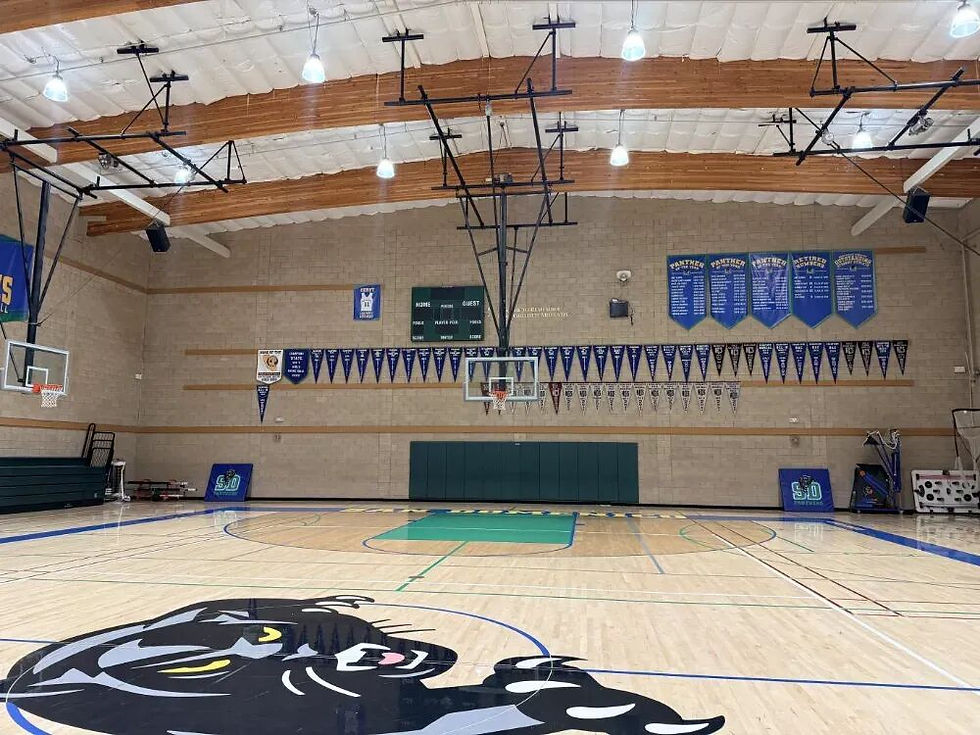
After the academic presentation, our group visited the athletic center, where Head Boys’ Basketball Coach and Assistant Athletic Director Tyler, along with tennis academy instructor Daniel, introduced the school’s athletic programs.

Athletics and Sports
The school offers more than 30 athletic teams, including 29 varsity teams across different levels. San Domenico is a no-cut school, meaning that any student who wishes to try a sport will be given an appropriate opportunity to participate. Currently, about 80% of students take part in at least one sport.
In terms of coaching and support, the school has a highly experienced and diverse coaching staff, many of whom are former professional or international-level athletes. Most coaches are full-time campus employees, allowing them to build close relationships with students both during training and in daily life. The campus also has a full-time athletic trainer who coordinates with the school physician, nursing staff, and injury recovery services, while also providing structured strength and conditioning support for students.
Athletic facilities are advanced and comprehensive, including a full-size gymnasium for basketball, volleyball, and badminton; a modern fitness center; a brand-new competition-level swimming pool for swimming and water polo; six tennis courts; a beach volleyball court; two artificial turf fields for soccer, baseball, and flag football; and several miles of scenic running and mountain biking trails.
Based on students’ interests and competitive levels, the school offers multiple team tiers: Varsity teams train at the highest intensity, 5–6 days per week, for highly committed and competitive athletes; Junior Varsity (JV) teams train about 4 days per week; Freshman teams train 3–4 days per week; and Club Sports meet twice a week, encouraging students to try new sports such as flag football.
The Montogro Tennis Academy is a major highlight of the school. Training takes place on campus year-round, with top-level programs offering 17–20 hours of training per week, sometimes during regular school hours—an exceptional opportunity at the secondary school level. Beginners receive approximately 3 hours of foundational training per week, while advanced players receive intensive professional coaching. The academy partners with the Montogro Academy in France and is managed by an internationally experienced coaching team. The head coach has worked with world-class players, including Serena Williams. Coaches also assist students in connecting with college coaches, particularly within the ACC conference system, and students may have opportunities to receive wild cards for professional tournaments in the future. Tennis training requires an additional fee, but the academy works closely with the school to provide financial support whenever possible.
In terms of college placement and athletic development, among graduating students who participate in sports, approximately 5–10 students continue to compete at the collegiate level each year. Athletics play an important role in students’ college pathways and overall development.
We then toured the outdoor tennis courts, soccer fields, beach volleyball courts, and other outdoor facilities. Along the way, we met the water polo coach, who was on Thanksgiving break but still warmly shared information about the water polo and swimming programs.
During the outdoor tour, we could see the campus surrounded by rolling hills, with the school resting quietly in the embrace of the mountains. The beautiful campus, green hills, and blue sky blended seamlessly together. Studying, training, and living in such an environment truly lifts the spirit.


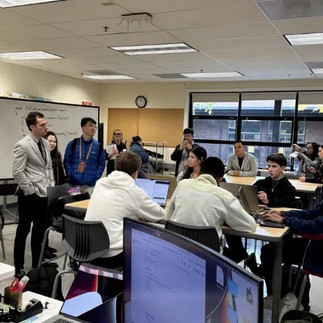
Next, we visited classes in Applied Economics, English (taught by an English teacher who also serves as an international student coordinator), Physics, and Animation. As mentioned earlier, San Domenico School offers an exceptionally broad curriculum with more than 120 courses, giving students extensive choices. The course offerings are designed to meet the diverse needs of different learners.


During the visit, we passed by the school dining hall. The space was clean, bright, and welcoming, with a wide variety of food options. The school partners with Epicurean Group, a California-based professional food service company specializing in corporate and campus dining, to provide high-quality and diverse meal services.
The dining hall updates its menu weekly and offers daily selections including fresh vegetables, fruits, soups, sides, a hot entrée station, a salad bar, vegetarian options, and international cuisine. The featured dish of the day was Buffalo chicken bites. Coffee is also available throughout the day to meet the needs of students and faculty.
Dining services include three meals per day from Monday through Friday, with brunch and dinner on weekends. Overall, the dining plan is thoughtfully designed to align with the rhythm of boarding student life.


Next, we went to the Mercedes Lounge, where the school prepared tomato soup and coffee for us, allowing us to take a short break.


One of the most anticipated parts of the visit was the academic and student life panel discussion. The school invited three international students along with several faculty members from the residential and academic teams to share their experiences studying and living at San Domenico School.
Among the student representatives, Frita is from Germany; Stefen is from China and is currently in his fourth year at San Domenico. He is a member of the basketball team and actively involved in student government and multiple clubs, serving as Student Body President—one of only two students to receive this honor in the school’s history. Another student, Rasco, is from Serbia and is currently a 12th grader in his first year at the school, serving as Vice President of the Student Government.
On the faculty side, Melisa Taylor is a residential life faculty member from the East Coast of the United States, with experience working at six boarding schools. She has been in California for three years. Melissa Murphy has 27 years of experience working at international schools and has been at San Domenico School for four years. She previously worked in Dubai and lived and worked in Seoul, South Korea, for 12 years. She currently serves as the International Student Program Coordinator, overseeing comprehensive support and management for international students.
In addition, Caitlin Clark is the Upper School Academic Dean and has been at San Domenico School for 11 years, primarily responsible for curriculum design, course selection guidance, and academic support.
Q&A Session
1. Why did you choose to attend San Domenico School?
Stefen: I’d like to start by sharing my academic and athletic life. In my first year at San Domenico, what surprised me most was that I could truly combine academics and athletics in a very professional way. In Chinese public schools, you often have to choose between academics and sports. But at San Domenico, the basketball program is very strong, the coaches are highly professional, and we spend a lot of time training and bonding together.
After school, I can still focus on academics, take AP courses, and prepare for college applications, and then go to basketball practice afterward. I’m able to balance academics and athletics very well, which is one of the things I love most about San Domenico School and one of the main reasons I chose to come here.
Frita: One of the reasons I really love this school is the warmth of the community. Everyone supports one another, and it goes beyond what you’d typically expect from a school community. Because we all live on the same campus, it truly feels like a big family where people care for and support each other.
2. What is weekend life and community life like for international students?
Rasco: For weekend outings and off-campus permissions, the school has a dedicated app where we can see all available weekend trips and activities. On weekends, we can join different activities, stay overnight at friends’ houses, or apply for day passes. As long as the faculty knows where we are, everything is clearly organized and well managed.
I never imagined I would form such close friendships here. This summer, I traveled back to Serbia with nine boarding friends and one day student. We first traveled around Serbia, then went together to Vienna and Prague. That experience truly showed me that the friendships here extend far beyond campus.
As a student leader, part of my responsibility is to support other students, especially helping new students adjust to boarding life as quickly as possible. Many new students have never lived in such a close-knit community before, so we accompany them and offer support. We also help organize community activities, such as a monthly community dinner where boarding students, residential faculty, and invited guests all come together.
3. College applications and academic support
Rasco & Stefen: The school offers a course called CAP Class (College Application Process Class), which meets once a week in small groups, usually with only 7–8 students per class. In this course, college counselors work closely with us on every aspect of the application process, including essay writing, course selection, extracurricular planning, and how to use summers effectively. Counselors also write highly personalized recommendation letters based on each student’s individual profile.
Rasco added: Close collaboration among athletic coaches, residential life leaders, academic deans, and college counselors is essential during the application process, because they fully understand our performance both in the classroom and on athletic teams and can support our college applications from multiple perspectives.
In addition, college admissions officers regularly visit campus. We can view information and sign up through the SCOIR app to meet admissions officers in person and learn more about different universities and their admissions requirements.
4. What TOEFL score is required for admission?
The school has clear English proficiency requirements for international students, with a minimum TOEFL score of 85 or equivalent to ensure students can successfully integrate into academic classes and campus life. In practice, applicants with English scores below 70 are generally difficult to admit, as lower language proficiency may affect the overall learning experience.
After enrollment, students take placement assessments to evaluate their academic levels (such as math), allowing the school to place them in the most appropriate courses. During the application process, the International Student Program Coordinator provides professional support and guidance for interviews and language assessments.
For transfer students, the school also offers targeted academic support to help them quickly adapt to the new curriculum and keep pace with their studies, ensuring a smooth transition.
Student Dorm & Life
We then toured the boarding dormitories and gained deeper insight into student life and the residential community.
Community and support: Students commonly describe the community as a big family, where everyone supports and cares for one another on a daily basis. Because students live together on campus, these close connections go beyond a typical school environment, creating a highly inclusive and supportive boarding culture.
Residential faculty: The school has a professional residential faculty team. The Athletic Director and Upper School Director also live in the dorms, sharing daily life with students. Residential faculty are on campus 24/7, with peak student engagement from 3:00 p.m. to 11:30 p.m.–12:00 a.m., as well as throughout the weekends.
Dormitories and facilities:
Dorms include student rooms, bathrooms, lounges, kitchens, and laundry facilities.
Common lounges are among the most frequently used spaces, where students cook, watch movies, play games, barbecue, or relax and chat by the fireplace.
Each dorm floor typically houses 18–20 students. The East Dorm is slightly larger, with 24 students on the top floor and 23 on the ground floor.
Weekends and outings: Students can participate in daily outings and weekend trips around the San Francisco Bay Area. They may also visit friends’ homes with day passes or overnight passes, pending approval from parents and residential faculty.
Addressing loneliness: Students form clubs such as the Asian Student Association and Latinx Cultural Club. Student leaders and residential faculty actively help students overcome feelings of isolation by creating opportunities for social interaction.


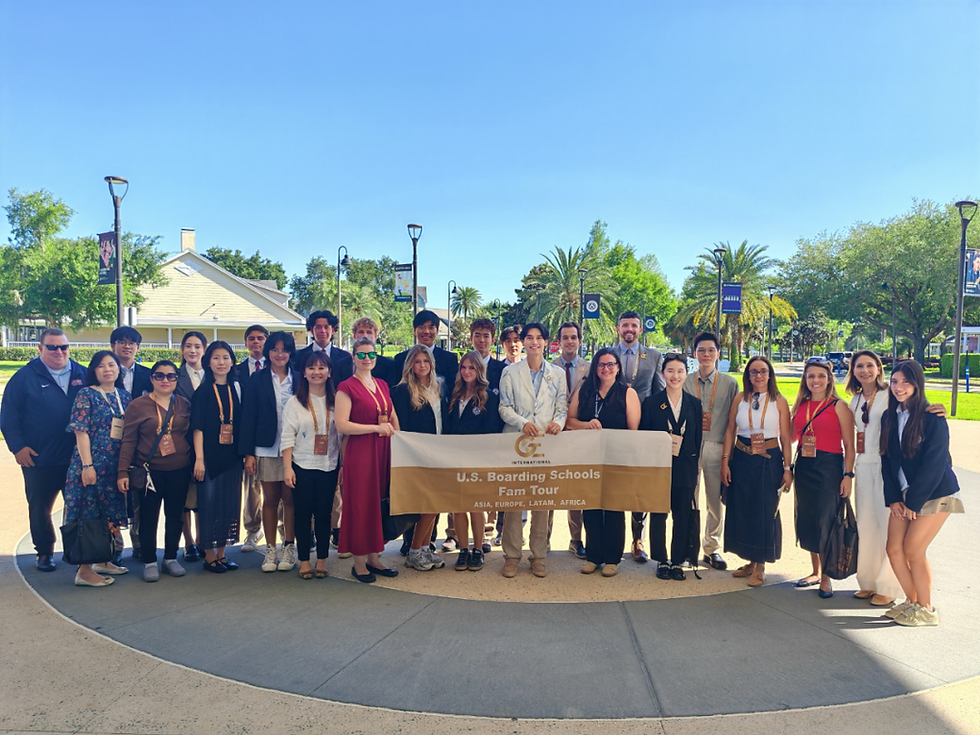
After enjoying a carefully prepared lunch, we took a group photo beneath a large tree on campus and reluctantly concluded our school visit.

This was truly an unforgettable experience. At San Domenico School, we met professional faculty teams in academics, athletics, and the arts; students with bright eyes, kind hearts, and clear goals; and residential faculty who provide international students with a warm and supportive home. We look forward to seeing each other again next time.

Comments